


Published on: September 15, 2025 | Updated on: September 15, 2025
Metal detectors are not inherently magnetic themselves, but they use magnetic fields to detect metal objects. Understanding this fundamental principle is key to successful treasure hunting.
The question “Are metal detectors magnetic?” is one I hear quite often from folks just starting out in this amazing hobby. It’s easy to get a little confused, especially when you’re holding a piece of gear that’s supposed to find buried treasure. You might wonder if the detector itself needs to be magnetic, or if it interacts with magnetic fields in a way that makes it magnetic. In this guide, I’m going to break down exactly how metal detectors work, clarify their relationship with magnetism, and show you how this essential knowledge will help you find more targets and avoid common pitfalls. Let’s get this breakthrough understanding sorted out so you can get back to the field with confidence.
How Metal Detectors Actually Work: It’s All About Fields
Most metal detectors operate on the principle of electromagnetic induction. They generate a magnetic field and then listen for disturbances in that field caused by conductive metal objects. This is the core concept that separates them from being simply “magnetic” to being sophisticated detection tools.
The Search Coil: The Heart of Detection
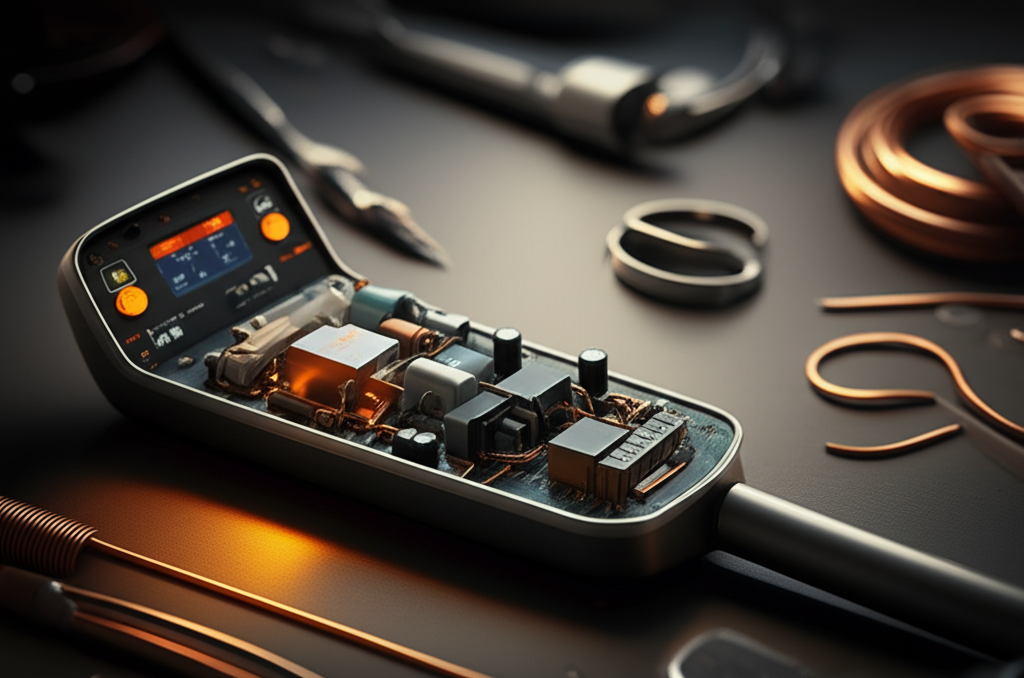
The search coil is where all the magic happens. It’s typically a flat, circular component at the bottom of your detector. This coil houses wires that carry an electric current.
When this current flows, it creates a magnetic field that radiates outward from the coil into the ground. Think of it like sending out a pulse of invisible energy.
Detecting Metal: The Magnetic Field Interaction
When this magnetic field encounters a metallic object underground, it induces a tiny electrical current within that metal object. This induced current then generates its own secondary magnetic field.
Your metal detector’s search coil is designed to pick up these secondary magnetic fields. It’s like the coil is listening for echoes.
The Signal: From Echo to Audio
When the search coil detects these faint magnetic echoes, it sends a signal to the control box. The control box then processes this signal and translates it into an audible tone or a visual display on the screen.
Different tones and display readings often indicate the type and depth of the metal target. This is how you differentiate between a coin, a nail, or a ring.
Magnetic vs. Non-Magnetic Metals: A Crucial Distinction
Understanding the difference between magnetic and non-magnetic metals is vital for any detectorist. While your detector responds to both, knowing which is which can significantly improve your recovery success and help you interpret signals.
Ferrous Metals: The Magnetic Ones
Ferrous metals are those that contain iron. Iron is ferromagnetic, meaning it can be strongly attracted to a magnet and can also be magnetized itself.
Common ferrous metals include iron, steel (which is mostly iron), and nickel. These are often the “trash” targets like nails, pull tabs, and bottle caps.
Non-Ferrous Metals: The Non-Magnetic Ones
Non-ferrous metals do not contain significant amounts of iron. This group includes precious metals and many common coins.
Examples include gold, silver, copper, aluminum, and lead. These are generally the targets we hope to find.
Understanding this difference helps you decide whether to dig a target, especially when dealing with heavily mineralized ground or lots of iron trash.
Do Metal Detectors Attract Metal? The Magnetic Misconception
This is where the confusion often creeps in. People see a metal detector finding metal and assume it must be attracting it like a magnet. This isn’t the case.
Metal detectors work by detecting the magnetic fields produced by induced currents in metal, not by attracting the metal itself. They are receivers, not magnets in the traditional sense.
The “Attraction” Illusion
While a detector’s magnetic field influences metal, it’s a two-way street of induction, not a simple pull. The detector isn’t strong enough to pull a coin out of the ground from a distance.
The interaction is about sensing a change in the existing magnetic field. It’s a subtle but critical difference.
Why This Matters for Your Finds
Knowing this helps you understand why some signals are stronger than others. It’s not just about proximity, but also about the conductivity and size of the target.
This knowledge empowers you to better interpret your detector’s signals and make more informed decisions about digging.
How Different Detector Technologies Handle Magnetism
Different types of metal detectors utilize variations in how they generate and sense magnetic fields. Understanding these technologies can help you choose the right tool for your detecting needs.
Very Low Frequency (VLF) Detectors
VLF detectors are the most common type for hobbyists. They use two coils: a transmitter coil and a receiver coil.
The transmitter coil generates a magnetic field, and the receiver coil detects disturbances. They excel at differentiating between various metal types.
Pulse Induction (PI) Detectors
PI detectors send out short, powerful pulses of magnetic energy. They then measure the magnetic field decay in the ground.
These detectors are less affected by mineralized ground and saltwater, making them ideal for beach and gold prospecting. They are generally less effective at discriminating between different metal types than VLF detectors.
Broadband Spectrum Analysis (BBS) and Multi-Frequency Detectors
More advanced detectors use multiple frequencies simultaneously or sweep across a wide spectrum. This allows them to gather more information about a target.
These technologies offer superior performance in challenging conditions and can detect a wider range of targets with greater accuracy.
The Role of Magnets in Pinpointers and Accessories
While the main detector coil doesn’t work by direct magnetic attraction, magnets play a crucial role in other essential metal detecting tools, especially pinpointers.
Pinpointers: Small but Mighty Magnets
Many handheld pinpointers, used to locate a target precisely once you’ve dug a plug, contain a small magnet. This magnet helps to attract small, iron-based debris.
This feature is particularly useful for quickly identifying and removing iron junk from your soil plug, making the final target recovery faster.
Other Accessories
You might find magnets used in some accessory holders or even in certain types of coil covers. Their purpose is usually for convenience or to aid in cleaning.
However, the core detection mechanism of your main detector remains based on electromagnetic induction, not simple magnetic attraction.
Are All Metal Detector Coils Magnetic?
This is a nuanced question. The electromagnetic field generated by the coil is what interacts with metal. The coil itself, being made of wire, isn’t a permanent magnet.
However, the current flowing through the coil creates a temporary magnetic field. It’s this field that’s key to detection.
Permanent Magnets vs. Electromagnets
A permanent magnet, like the kind you might have on your fridge, has a constant magnetic field. A metal detector coil, when powered on, acts as an electromagnet.
This electromagnetism is dynamic and controllable, which is essential for the detector to function and discriminate targets.
Understanding Coil Types
Different coil designs and technologies (like DD coils vs. concentric coils) can influence the shape and depth of the magnetic field. But the underlying principle of generating and sensing a magnetic field remains the same.
Testing Your Detector: Magnetic vs. Non-Magnetic Targets
A great way to understand how your detector works is to perform simple tests with known targets. This hands-on approach solidifies the concepts we’ve discussed.
Gathering Your Test Targets
Collect a variety of common metal items. Include ferrous items like an iron nail, a steel washer, and a nickel.
Also, gather non-ferrous items such as a copper penny, a silver dime, a gold ring (if you have one), and an aluminum pull tab.
Conducting the Test
Place your detector on a non-metallic surface (like a wooden table). Wave each target over the coil at various distances.
Pay close attention to the tones and any visual indicators your detector provides for each target. Note how it responds differently to iron versus gold or silver.
Interpreting the Results
You’ll likely notice your detector reacts differently to ferrous (magnetic) metals compared to non-ferrous (non-magnetic) metals. This confirms its ability to discriminate.
This practical test is invaluable for learning your machine’s responses and improving your ability to identify targets in the field.
Factors Affecting Metal Detector Performance
Several factors can influence how effectively your metal detector performs. Understanding these will help you get the most out of your detecting sessions.
Ground Mineralization
The ground itself can contain minerals that have magnetic properties. These minerals can interfere with the detector’s magnetic field, causing false signals or masking real targets.
Modern detectors have ground balancing features to help mitigate this, but it remains a significant factor, especially in iron-rich soils or areas with high concentrations of natural magnetic minerals.
Target Size and Depth
Larger targets generally produce stronger signals than smaller ones, and shallower targets are easier to detect than deeper ones.
The shape of the target also plays a role; a flat coin will produce a different signal than a spherical lead ball of the same weight.
Detector Settings and Coil Choice
The settings on your detector (like sensitivity, discrimination, and threshold) are crucial. Adjusting these appropriately for the conditions can make a huge difference.
Similarly, using the right coil for the job – a larger coil for wider coverage, a smaller coil for trashy areas or gold prospecting – can optimize your finds.
Common Misconceptions About Metal Detectors and Magnetism
Let’s address a few more common misunderstandings I’ve encountered in the field that relate to metal detectors and magnetism. Clearing these up will boost your confidence.
“My Detector is Weak Because It’s Not Magnetic”
This is a common misconception. A detector’s effectiveness isn’t measured by its own magnetism but by its ability to generate and sense electromagnetic fields. A strong detection capability doesn’t require the detector itself to be a permanent magnet.
“Iron Targets Are Always Bad”
While iron targets are often trash, they can also be indicators of historical activity. Sometimes, iron items are associated with valuable non-ferrous metals. Learning to interpret iron signals can lead to unexpected finds.
“Waterproof Means You Can’t Use It in Saltwater”
Many detectors are waterproof, but saltwater is highly conductive and can be very “noisy” for detectors. This is where Pulse Induction (PI) detectors often shine, as they are less affected by saltwater’s conductivity.
Choosing the Right Metal Detector for Your Needs
Understanding the core principles, including the role of magnetism and electromagnetic fields, is key to selecting the best detector for your intended use.
For Beginners
If you’re just starting, a good VLF detector with easy-to-understand settings is ideal. Look for models known for their user-friendliness and versatility in finding coins and relics.
Many entry-level detectors offer excellent performance and can help you learn the ropes without being overwhelmed. Brands like Garrett, Minelab, and Nokta Makro offer great beginner options.
For Coin and Relic Hunting
Coin and relic hunters often benefit from VLF detectors with good discrimination capabilities. This allows them to filter out iron trash while still detecting desirable targets.
Multi-frequency detectors are becoming increasingly popular for their ability to handle various ground conditions and target types effectively.
For Gold Prospecting
Gold prospecting requires detectors sensitive to small, low-conductivity targets. Pulse Induction (PI) detectors or high-frequency VLF detectors are often preferred, especially in mineralized ground.
The ability to handle iron mineralization without excessive false signals is crucial for serious gold hunters.
Frequently Asked Questions About Metal Detectors and Magnetism
Here are some common questions beginners have about how metal detectors work and their relationship with magnetic fields.
Q1: Can I use a strong magnet to boost my metal detector’s signal?
No, using a strong external magnet with your detector is not recommended and won’t boost its signal. Metal detectors work by generating their own electromagnetic fields and sensing disturbances. Adding an external magnet can interfere with this process and lead to inaccurate readings or damage.
Q2: Why does my detector sometimes give a strong signal for a rusty nail?
Rusty nails are made of iron, which is a ferrous metal. While your detector might be set to discriminate against iron, very large or deeply buried iron objects can still produce strong signals that your detector picks up. Sometimes, valuable items can be found near iron objects.
Q3: Are metal detectors safe to use around pacemakers?
Metal detectors generate low-frequency electromagnetic fields that are generally considered safe for individuals with pacemakers. However, it’s always best to consult with a medical professional or the pacemaker manufacturer for specific advice regarding electromagnetic interference.
Q4: How deep can a metal detector find metal?
The depth a metal detector can reach depends on many factors, including the detector’s power, the coil size, the target’s size, shape, and depth, and the ground mineralization. Typically, coin-sized targets might be detected at depths of 6-12 inches, while larger objects can be found much deeper.
Q5: Do metal detectors detect all types of metal equally well?
No, metal detectors generally respond differently to various metals. They are typically most sensitive to highly conductive metals like silver and copper. Iron and steel produce different signals, and gold’s response can vary depending on its purity and alloy.
Q6: Can a metal detector detect underground pipes that aren’t metal?
Standard metal detectors are designed to find metallic objects. They cannot detect non-metallic pipes (like PVC or clay) or other non-metallic underground features. Specialized ground-penetrating radar (GPR) or pipe locators are needed for such tasks.
Final Verdict: Understanding the Electromagnetic Dance
So, to finally put the question to rest: are metal detectors magnetic? No, not in the sense of being a permanent magnet. However, they rely entirely on the principles of electromagnetism to function. They generate a magnetic field and then detect the subtle changes caused by other metallic objects in their vicinity. This electromagnetic dance is what allows us to uncover the treasures hidden beneath the surface.
By understanding that your detector is a sophisticated receiver of electromagnetic signals rather than a simple magnet, you gain a deeper appreciation for its capabilities. This knowledge empowers you to interpret signals more accurately, choose the right equipment, and ultimately, improve your success rate in the field. Keep practicing, keep learning, and happy hunting!
