


Published on: October 6, 2025 | Updated on: October 6, 2025
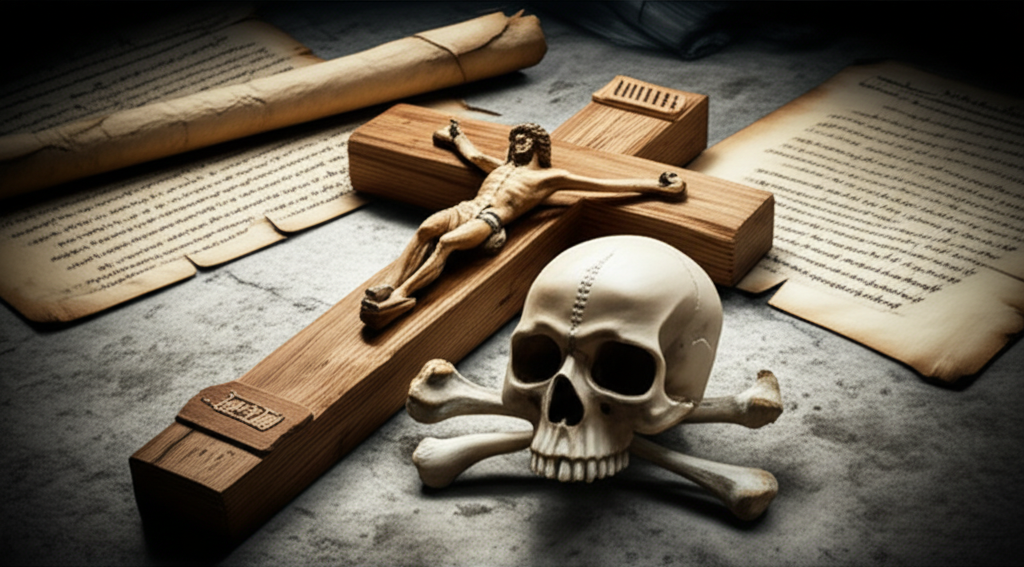
The history of the crucifix with skull and crossbones is rich with symbolism, often misunderstood. This emblem signifies mortality, faith, and the eternal struggle between good and evil, appearing in various historical contexts from religious art to pirate lore.
Crucifixes bearing a skull and crossbones are striking symbols that often spark curiosity, especially for those of us who spend time outdoors exploring historical grounds. You might stumble upon such an image etched into an old piece of metal, a weathered stone, or even depicted in historical texts. It’s a powerful emblem, but its meaning can be a bit elusive. Many people wonder about its origins and what it truly represents, especially when compared to the more common depictions of the crucifixion.
In this guide, I’ll break down the fascinating history behind the crucifix with skull and crossbones. We’ll explore its roots, understand its multifaceted symbolism, and uncover the hidden truths that make it such an enduring image across different cultures and time periods. Get ready to see this symbol in a whole new light, just like finding a rare coin with your metal detector!
Contents
- 1 Unpacking the Symbolism: Beyond the Surface
- 2 The Crucifix: Foundation of Faith
- 3 The Skull and Crossbones: Memento Mori
- 4 Historical Roots: Early Christian Symbolism
- 5 The Skull Beneath the Cross: A Deeper Meaning
- 6 Religious and Artistic Interpretations
- 7 The Pirate Connection: A Misunderstood Legacy
- 8 Crucifixes in Maritime History
- 9 Distinguishing Religious from Secular Use
- 10 Finding and Identifying Such Relics
- 11 Preservation and Ethical Considerations
- 12 FAQ: Your Questions Answered
- 13 Conclusion: A Symbol of Enduring Significance
- 14 Author
Unpacking the Symbolism: Beyond the Surface
The crucifix with a skull and crossbones is far more than just a morbid image; it’s a profound statement about life, death, and faith. Its components, the crucifix, the skull, and the crossbones, each carry significant weight. Understanding these individual elements is key to appreciating their combined power and historical context.
This emblem serves as a stark reminder of our own mortality. It prompts introspection on the fleeting nature of life and the inevitability of death. This contemplation, however, isn’t meant to be despairing; rather, it encourages a deeper appreciation for the present and a focus on spiritual matters.
The Crucifix: Foundation of Faith
At its core, the symbol includes a crucifix, representing the crucifixion of Jesus Christ. This is the central pillar of Christian faith, symbolizing sacrifice, redemption, and the promise of eternal life. Its presence anchors the emblem within a religious framework, even when other elements might suggest darker themes.
The crucifix itself is a powerful icon of suffering and ultimate triumph over death. It speaks to the core tenets of Christianity, including love, forgiveness, and the resurrection. This foundational element ensures that the symbol is not merely about death, but about the spiritual journey through it.
The Skull and Crossbones: Memento Mori
The skull and crossbones, universally recognized, are powerful symbols of death and mortality. This imagery is deeply rooted in the concept of memento mori, a Latin phrase meaning “remember you must die.” This practice was common in medieval Christianity as a way to remind people of the transient nature of earthly life and the importance of preparing for the afterlife.
Historically, skulls and crossbones were often found in burial sites, cathedrals, and on tombs. They served as a visual sermon, urging viewers to live virtuously and focus on spiritual salvation rather than worldly possessions or pleasures. This stark reminder aimed to foster humility and piety.
Historical Roots: Early Christian Symbolism
The combination of Christian imagery with symbols of death predates pirate lore by centuries. Early Christians, facing persecution and grappling with the concept of martyrdom, often used symbols to represent their faith and beliefs. The skull, often referred to as “Adam’s head,” became associated with the original sin and the fall of man, which Christ’s sacrifice was meant to redeem.
In early Christian art, you can find depictions of skulls at the foot of the cross. This placement signifies Christ’s victory over death and sin, even at the moment of his greatest suffering. It highlights the belief that through his sacrifice, death itself was conquered.
The Skull Beneath the Cross: A Deeper Meaning
When a skull and crossbones are placed beneath the crucifix, it creates a powerful narrative. It suggests that Christ’s sacrifice is made for all humanity, including those who have died or will die. The skull represents humanity in its mortal state, acknowledging the universality of death that Christ’s resurrection transcends.
This arrangement is a profound theological statement. It illustrates that the crucifixion is not just an event, but a cosmic act of redemption that addresses the fundamental human condition of mortality. It’s a visual sermon on faith’s ultimate triumph.
Religious and Artistic Interpretations
Throughout history, artists and theologians have interpreted the crucifix with skull and crossbones in various ways. In some contexts, it represents penitence and the acknowledgment of sin. For others, it’s a symbol of asceticism, where one renounces worldly desires in favor of spiritual devotion.
Consider the works of artists like Hieronymus Bosch, whose fantastical imagery often included skulls and crucifixes, exploring themes of sin, temptation, and divine judgment. These interpretations add layers of complexity to the symbol, showing its adaptability across different artistic and theological viewpoints.
The Pirate Connection: A Misunderstood Legacy
The most popular modern association with the skull and crossbones is, of course, piracy. The Jolly Roger flag, often featuring a skull and crossbones, became synonymous with fear and defiance at sea. However, this association is relatively recent compared to the symbol’s long religious history.
It’s important to understand that pirates likely adopted the skull and crossbones for its intimidating effect. They wanted to strike fear into their targets, encouraging surrender without a fight. This practical application of the symbol differs greatly from its original religious intent.
Crucifixes in Maritime History
While pirates are the most famous users, various maritime groups and navies have employed skull and crossbones imagery. These uses often retained a sense of mortality, serving as a grim reminder of the dangers faced at sea or as a symbol of a determined, fearless crew. Sometimes, it was a mark of brotherhood or a shared understanding of the risks involved.
Naval flags and insignia sometimes incorporated these elements, not necessarily for malice, but as a stark representation of their mission or the potential consequences of battle. This shows how the symbol’s meaning could adapt to different contexts while still retaining its core message of confronting mortality.
Distinguishing Religious from Secular Use
When you encounter a crucifix with skull and crossbones, context is everything. A religious artifact found in a church or a historical religious site likely carries its original theological meaning. Conversely, an item associated with pirate history or general morbid curiosity will have a different interpretation.
It’s fascinating how a single symbol can shift its primary meaning based on its surroundings and historical period. This adaptability is part of what makes the crucifix with skull and crossbones so compelling and enduring. Always consider where and when you find such imagery.
Finding and Identifying Such Relics
For us detectorists, finding items bearing this symbol can be incredibly exciting. Metal detectors are excellent tools for uncovering buried artifacts, and old cemeteries, historical homesteads, or shipwreck sites are prime locations where such relics might lie. Knowing what to look for and how to interpret your finds is crucial.
When you detect an object with this imagery, take a moment to consider its condition and the context of your find. Is it a small pendant, a buckle, or part of a larger object? These details can offer clues to its original purpose and historical significance. Always handle old relics with care.
Preservation and Ethical Considerations
If you are fortunate enough to unearth a relic featuring a crucifix with skull and crossbones, remember that preservation is key. These items are often fragile and can be damaged by improper handling or cleaning. It’s often best to consult with experts or historical societies on the best way to conserve your find.
Ethical detecting practices mean respecting the historical context of your finds. Documenting where you found something and, if necessary, reporting significant discoveries to relevant authorities ensures that history is preserved for future generations. We are custodians of the past when we detect.
FAQ: Your Questions Answered
Q1: Is the crucifix with skull and crossbones always a negative symbol?
No, not at all. While it represents death, its primary historical context is religious, symbolizing Christ’s victory over death and reminding believers of their mortality to encourage a virtuous life.
Q2: Where did the skull and crossbones originate as a symbol of death?
The skull and crossbones have been used to symbolize death for centuries, appearing in ancient burial sites and later becoming a prominent memento mori symbol in medieval Christianity.
Q3: Did pirates invent the skull and crossbones symbol?
Pirates did not invent the symbol but adopted it for their flags (the Jolly Roger) due to its intimidating appearance, aiming to encourage surrender from merchant ships.
Q4: Can I find crucifixes with skull and crossbones while metal detecting?
Yes, absolutely! These items can be found in old cemeteries, historical home sites, or areas with a history of religious or maritime activity.
Q5: What should I do if I find a crucifix with skull and crossbones?
Handle it carefully, document its location, and consider consulting with a local historical society or museum for guidance on identification and preservation.
Q6: Is this symbol related to any specific religious order?
While not exclusive to one order, the symbol’s themes of mortality and redemption resonate with many religious traditions, particularly within Christianity and its contemplative practices.
Conclusion: A Symbol of Enduring Significance
The crucifix with skull and crossbones history is a testament to the enduring power of symbols to convey complex ideas. From its ancient roots in Christian theology, reminding us of mortality and the promise of salvation, to its more recent, albeit often misunderstood, association with pirates, this emblem has captivated imaginations for centuries. For detectorists, uncovering such an artifact is like holding a piece of history, a tangible link to the past that sparks curiosity and deepens our connection to the stories buried beneath our feet. Understanding the dual nature of this symbol—its spiritual depth and its historical adaptations—enhances our appreciation for the rich tapestry of human belief and expression. Keep exploring, keep learning, and remember that every find has a story waiting to be told.

