


Published on: October 8, 2025 | Updated on: October 8, 2025
Detect gold with metal detector: Essential breakthrough techniques and gear for successful prospecting. Learn how to find those elusive nuggets with expert advice.
The dream of finding gold, whether a few shiny flakes or a substantial nugget, is a powerful draw for many treasure hunters. But actually detecting gold with a metal detector can feel like searching for a needle in a haystack. Many detectorists struggle, overwhelmed by ground minerals, faint signals, and the sheer vastness of potential prospecting areas. This guide is your roadmap, cutting through the confusion with proven strategies and the right equipment to help you successfully detect gold with a metal detector.
Why Gold is Tricky to Detect with Metal Detectors
Gold presents unique challenges for metal detectors. Its conductivity and the way it occurs naturally, often in mineralized soil, can mask its signal. Understanding these difficulties is the first step to overcoming them.
Understanding Gold’s Metallic Properties

Gold is a noble metal, meaning it’s highly resistant to corrosion and oxidation. This makes it very conductive, which is good for detection, but it also means it can behave differently than other targets. Its density is also a factor in how it responds to different frequencies.
The Challenge of Mineralized Ground
Many prime gold prospecting areas are rich in iron minerals and other geological complexities. This “hot ground” can create false signals, overwhelm a detector’s ability to discriminate, and significantly reduce the depth at which gold can be found. Learning to work with or overcome this mineralization is crucial.
The Essential Breakthrough: Choosing the Right Metal Detector for Gold
Not all metal detectors are created equal when it comes to finding gold. The breakthrough lies in selecting a machine specifically designed for gold prospecting or one with advanced features that allow for it.
High Frequency is Key
For detecting small gold nuggets, higher frequencies (typically 15 kHz and above) are essential. These frequencies are more sensitive to the small, low-conductivity targets that gold often presents. Lower frequencies are better for larger, deeper targets like coins and relics.
Advanced Ground Balancing Capabilities
Detecting gold often means hunting in heavily mineralized areas. A detector with excellent manual and automatic ground balancing is a game-changer. This feature allows the detector to ignore the ground’s mineral content, isolating the signal from actual targets.
Dedicated Gold Prospecting Modes
Many modern detectors come with specific “gold modes” or all-metal modes that are optimized for gold detection. These modes often sacrifice some discrimination capabilities to maximize sensitivity to faint gold signals. They are designed to pick up the subtle nuances of gold.
Essential Metal Detector Accessories for Gold Prospecting
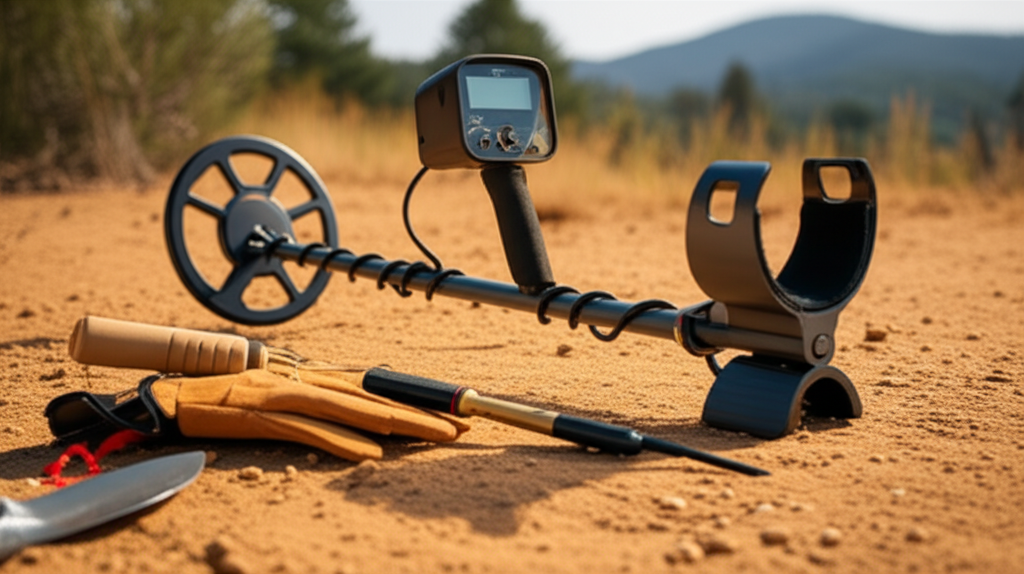
Beyond the detector itself, a few key accessories can dramatically improve your success rate when you aim to detect gold with a metal detector. These tools enhance your efficiency and ability to locate those precious flakes.
Specialized Gold Coils
Smaller coils, especially elliptical ones, are excellent for navigating tight spaces and rocky terrain common in goldfields. They also offer enhanced sensitivity to smaller targets. Larger coils can cover more ground but may struggle with very small gold.
Accurate Pinpointers
Once your main detector signals a target, a reliable pinpointer is indispensable. These small, handheld devices help you quickly and precisely locate the target within the excavated plug of soil, saving you time and minimizing disturbance to the ground.
Digging Tools Tailored for Prospecting
You’ll need robust digging tools, from a sturdy shovel for general excavation to a small trowel or scoop for delicately extracting targets from mineralized soil. A good gold pan is also essential for separating fine gold from sediment.
Advanced Techniques to Detect Gold with Metal Detector
Knowing your gear is only half the battle; mastering the techniques to use it effectively in gold-bearing environments is the other. These methods are refined through experience and a deep understanding of your detector’s capabilities.
Mastering Ground Balancing
Proper ground balancing is non-negotiable. You’ll want to learn to perform manual ground balance frequently, especially when moving between different soil types or mineral concentrations. This ensures your detector is tuned to the ground, not reacting to it.
Understanding Target Signals
Gold nuggets often produce a sharp, clear, but sometimes faint signal. Learning to distinguish these from iron trash or hot rocks requires practice. Listen for the “chatter” or subtle changes in tone that indicate a potential target.
Sweep Speed and Coil Overlap
Slow, methodical sweeps are crucial for detecting small gold. Overlap your coil passes by at least 50% to ensure you don’t miss faint signals. A consistent sweep speed prevents false readings.
Working Different Frequencies
If your detector offers multiple frequencies or interchangeable coils, experiment. Sometimes, a target that is faint on one frequency will be stronger on another, especially if the gold is very small or in highly mineralized soil.
Common Pitfalls to Avoid When Hunting Gold
Many detectorists make common mistakes that lead to frustration and missed opportunities. Avoiding these pitfalls is as important as employing the right techniques to detect gold with a metal detector.
Ignoring Small Targets
Gold nuggets can be minuscule. Many detectorists, especially those accustomed to coin hunting, might overlook the faint signals that indicate small gold. Adjust your sensitivity and discriminate less aggressively.
Rushing the Digging Process
Excited by a potential gold signal, it’s easy to rush and make a mess. Carefully excavate your target, use your pinpointer diligently, and recover the soil plug for careful examination. This helps preserve the site and ensures you don’t lose the tiny nugget.
Not Checking Your Settings
Ground mineralization, coil type, and target size all influence optimal detector settings. Don’t set it and forget it. Re-evaluate your settings regularly based on the conditions and your finds.
How to Detect Gold in Different Environments
The techniques and equipment you use can vary depending on where you’re looking for gold. Each environment presents its own set of challenges and opportunities for the determined prospector.
Riverbeds and Creek Beds
These areas are prime locations for gold as water naturally concentrates heavier materials. Look for areas where the current slows down, such as behind large rocks, in eddies, or on the inside bends of rivers. The gold often settles in cracks and crevices.
Dry Washes and Alluvial Plains
Dry washes are ancient streambeds that are now devoid of water. Gold can be trapped in these ancient channels. Alluvial plains are wider areas where rivers once flowed, and gold can be spread out, requiring methodical sweeping.
Hard Rock Mining Areas
Areas with historical hard rock gold mining can still yield placer gold that has eroded from veins. These areas are often characterized by quartz and other indicator minerals. Prospecting near old mine tailings can also be fruitful.
The Best Metal Detectors for Gold Prospecting
Selecting the right detector can feel overwhelming. Based on my field experience, here are a few top contenders that consistently perform well for detecting gold with a metal detector.
| Detector Model | Key Features for Gold | Pros | Cons |
|—|—|—|—|
| Minelab GPZ 7000 | Zero Voltage Transmission (ZVT) technology, advanced sensitivity to small gold | Unmatched depth and sensitivity, excellent performance in highly mineralized ground | High price point, heavier than some other detectors |
| Garrett AT Gold | High frequency (18 kHz), waterproof, excellent ground balancing | Affordable for its performance, versatile for different conditions | Smaller coil might require slower sweeps for maximum coverage |
| Fisher Gold Bug Pro | High frequency (19 kHz), lightweight, intuitive controls | Very sensitive to small gold, user-friendly for beginners | Less effective in extremely hot ground compared to VLF detectors |
| Nokta Makro Gold Finder | High frequency (20 kHz), waterproof, excellent discrimination for iron | Very sensitive, good price point, robust build | Ground balancing might not be as sophisticated as higher-end models |
These detectors represent a range of price points and features, but all are capable of helping you detect gold with a metal detector effectively.
Understanding Ground Mineralization and Iron Rejection
Ground mineralization is the biggest hurdle for any gold prospector. Learning how your detector handles it and how to reject iron is a significant breakthrough.
Types of Mineralization
Ground mineralization can range from mild to extreme. Iron oxides, salt content, and conductive clays all affect how your detector performs. Some detectors handle hot ground better than others.
Iron Rejection Settings
While you want to detect gold, you also want to avoid digging endless amounts of iron trash. Most detectors have iron rejection settings, but for gold prospecting, these should be used sparingly, if at all, as they can sometimes mask faint gold signals. Learning to interpret the audio for iron versus gold is a skill worth developing.
The Role of Electromagnetic Induction (EMI)
Electromagnetic Induction (EMI) is the fundamental principle behind how metal detectors work. Understanding this helps you appreciate why certain settings and frequencies are better for gold.
How Detectors Send and Receive Signals
Your metal detector sends out an electromagnetic field. When this field encounters a conductive object like gold, it induces a small current in that object. The detector’s coil then senses this secondary field created by the induced current.
Frequency and Target Response
Higher frequencies are more responsive to small, conductive targets like gold. They are also more susceptible to ground mineralization and small surface targets. Lower frequencies penetrate deeper but are less sensitive to tiny gold.
Frequently Asked Questions About Detecting Gold
Here are some common questions that often come up when people are starting to detect gold with a metal detector.
What is the best metal detector for beginners looking for gold?
For beginners, the Garrett AT Gold or the Nokta Makro Gold Finder are excellent choices. They offer good sensitivity to gold at a reasonable price and are relatively easy to use.
How deep can a metal detector find gold?
Depth varies greatly depending on the detector’s frequency, coil size, target size, and ground mineralization. High-end gold detectors can find small nuggets a few inches deep, while larger nuggets might be detected at greater depths.
Can I use a general-purpose metal detector to find gold?
Yes, but it’s much harder. A general-purpose detector might work in low-mineralized areas for larger nuggets, but it won’t be as sensitive or effective as a dedicated gold detector, especially for small flakes.
What sounds does gold make on a metal detector?
Gold typically produces a sharp, clear, high-pitched tone. It’s often a distinct “chime” or a quick, clean signal, differentiating it from the duller, grittier signals of iron.
Is it worth investing in a pinpointer for gold prospecting?
Absolutely. A pinpointer is essential for quickly and accurately locating small gold nuggets once you’ve pinpointed the general area with your main detector. It saves immense time and effort.
How important is coil selection for gold prospecting?
Coil selection is extremely important. Smaller coils, particularly elliptical ones, are generally preferred for gold prospecting as they offer better sensitivity to small targets and maneuverability in rocky terrain.
Conclusion: Your Breakthrough to Detecting Gold
Detecting gold with a metal detector is a challenging but incredibly rewarding pursuit. The essential breakthrough comes from understanding the unique properties of gold, choosing the right high-frequency detector with advanced ground balancing, and mastering specific prospecting techniques. By avoiding common pitfalls, selecting appropriate accessories, and practicing diligently, you significantly increase your chances of unearthing those elusive gold nuggets. Happy hunting, and may your coil find the gleam of gold!
