


Published on: November 6, 2025 | Updated on: November 6, 2025
Industrial metal detectors are vital for safety and quality control, evolving with advanced technology for more precise detection and wider applications. These breakthroughs ensure efficient operations and product integrity across various sectors.
Welcome to ToolGuider! If you’ve ever wondered about the powerful machines that keep our industries safe and our products pure, you’re in the right place. Metal detectors are everywhere, but industrial metal detectors are the silent guardians of factories and production lines. They might seem complex, but understanding their essential breakthroughs can be surprisingly simple. I’m here to guide you, using my years of experience in the field, to uncover how these incredible tools work and why they are so important. We’ll explore the innovations that have made them indispensable.
What is an Industrial Metal Detector and Why is it Important?
An industrial metal detector is a machine that finds metal objects. It is used in factories and on production lines. This helps ensure products are safe for people to use. It also stops metal from damaging expensive machinery.
These detectors are crucial for quality control. They prevent contamination in food, pharmaceuticals, and other goods. Finding metal early saves money and prevents harm. My own experiences have shown me how a simple detector can avert a major disaster.
The Evolution of Metal Detector Technology
Metal detector technology has changed a lot over time. Early detectors were simple and not very accurate. They used basic electromagnetic fields to find metal. These were okay for finding large items.
Modern industrial metal detectors are much smarter. They use advanced digital signals and multi-frequency technology. This allows them to find tiny metal fragments. They can also tell the difference between different types of metal.
Key Breakthroughs in Industrial Metal Detector Design
Several innovations have made industrial metal detectors so effective. One major step was the development of digital signal processing. This technology allows for much more precise control. It can filter out noise and focus on metal signals.
Another big breakthrough is multi-frequency detection. Instead of using just one signal frequency, these detectors use several. This helps them detect a wider range of metals, including very small or non-ferrous ones. It also improves their performance in challenging environments.
Understanding Different Types of Industrial Metal Detectors
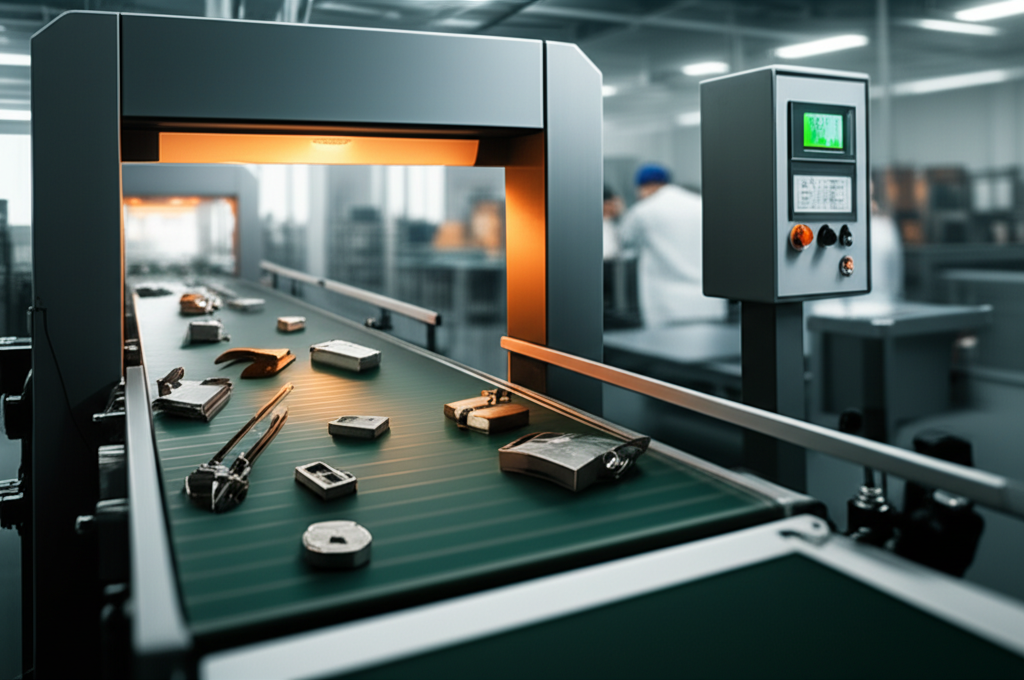
There are a few main types of industrial metal detectors. Conveyor belt metal detectors are very common. They are placed on conveyor belts to check products as they move along. These are great for the food and packaging industries.
Other types include pipeline metal detectors and gravity-feed metal detectors. Pipeline detectors check materials flowing through pipes. Gravity-feed detectors are used for powders and granules falling from a height. Each type is designed for specific industrial needs.
How Advanced Coils and Sensors Improve Detection
The coils inside a metal detector are like its ears. They send out and receive electromagnetic signals. Older coils were bulky and less sensitive. Breakthroughs in coil design have made them smaller and much more powerful.
New sensor technology also plays a key role. These sensors can detect even the slightest magnetic changes. This means they can find very small pieces of metal. This is vital for industries where even a tiny fragment is unacceptable.
The Role of Digital Signal Processing (DSP)
Digital Signal Processing, or DSP, is a game-changer. It takes the raw signals from the coils and processes them digitally. This allows the detector to analyze the signals with incredible accuracy. It can identify the size, shape, and type of metal detected.
DSP also helps reduce false alarms. It can ignore interference from other electronic devices or the environment. This means fewer interruptions and more reliable detection. I’ve seen firsthand how DSP makes a detector far more dependable.
Multi-Frequency Technology: A Deeper Dive
Multi-frequency technology is a significant advancement. Different metals react differently to various frequencies. By using multiple frequencies at once, a detector can see a wider range of metals. This includes ferrous metals (like iron) and non-ferrous metals (like aluminum and copper).
This technology is especially useful for challenging products. For example, checking salty foods or products with high moisture content. These products can sometimes interfere with single-frequency detectors. Multi-frequency systems overcome these issues.
Integration with Production Lines and Automation
Modern industrial metal detectors are designed to work with automation. They can be easily integrated into existing production lines. When metal is detected, the system can automatically reject the contaminated product. This can be done using a pusher arm or a diverter.
This automation saves time and labor. It ensures that only good products reach the market. The seamless integration is a testament to how far this technology has come. It makes quality control more efficient than ever before.
Software and Connectivity: The Smart Factory Era
Today’s industrial metal detectors are smart devices. They often come with sophisticated software. This software allows for easy setup and monitoring. You can adjust settings, track performance, and log detection events.
Many detectors can now connect to networks. This allows them to share data with other factory systems. This connectivity is part of the “smart factory” concept. It enables better overall process control and traceability.
Applications Across Various Industries
Industrial metal detectors are used in many fields. The food industry uses them to find metal in packaged goods. This protects consumers and brand reputation. Pharmaceutical companies use them to ensure medicines are free of metal contaminants.
Other sectors include plastics manufacturing, mining, and textiles. In plastics, they prevent damage to processing equipment. In mining, they can help sort valuable ores. Their versatility is a key reason for their widespread adoption.
Choosing the Right Industrial Metal Detector
Selecting the correct industrial metal detector depends on your needs. Consider what you are detecting and in what product. Think about the size and type of metal you need to find. Also, consider the speed of your production line.
It’s also important to think about the environment. Is it wet, dusty, or subject to vibration? Brands like Loma, Fortress Technology, and Sesotec offer specialized solutions. Consulting with a supplier is a good idea. They can help you find the best fit for your operation.
Future Trends in Industrial Metal Detection
The future of industrial metal detection looks exciting. We will likely see even greater sensitivity and accuracy. Artificial intelligence may play a larger role in signal analysis. This could lead to even fewer false alarms and better detection of complex contaminants.
Further integration with other inspection technologies, like X-ray systems, is also expected. This will provide a more comprehensive approach to quality control. The goal is always to make production lines safer and products purer.
Frequently Asked Questions
What is the primary function of an industrial metal detector?

An industrial metal detector’s main job is to find metal objects in products or materials. This ensures safety and prevents damage to machinery.
Can industrial metal detectors find all types of metal?
Yes, advanced models can detect both ferrous (like iron) and non-ferrous metals (like aluminum and copper). Multi-frequency technology helps detect a wide range.
How do I know which industrial metal detector to buy?
Consider the product you are inspecting, the size of metal you need to find, and your production line speed. Consult with manufacturers for expert advice.
Are industrial metal detectors expensive?
The cost varies greatly depending on the features and brand. However, they are an investment that pays for itself by preventing costly product recalls or equipment damage.
How often do industrial metal detectors need maintenance?
Regular maintenance is usually recommended. This includes cleaning and calibration checks. Follow the manufacturer’s guidelines for best performance.
Can these detectors be used for non-product items?
Yes, they are also used to check raw materials, waste streams, and even for security screening in some industrial settings.
Conclusion: The Unseen Guardians of Industry
Industrial metal detectors are essential tools. Their technological breakthroughs have made them incredibly effective. They protect consumers, safeguard machinery, and ensure product quality. From simple beginnings, they have become sophisticated guardians on our production lines.
I’ve seen how these machines work tirelessly. They are a vital part of modern manufacturing. The continuous innovation in this field means they will only become more important. Investing in the right industrial metal detector is a smart move for any business.
