


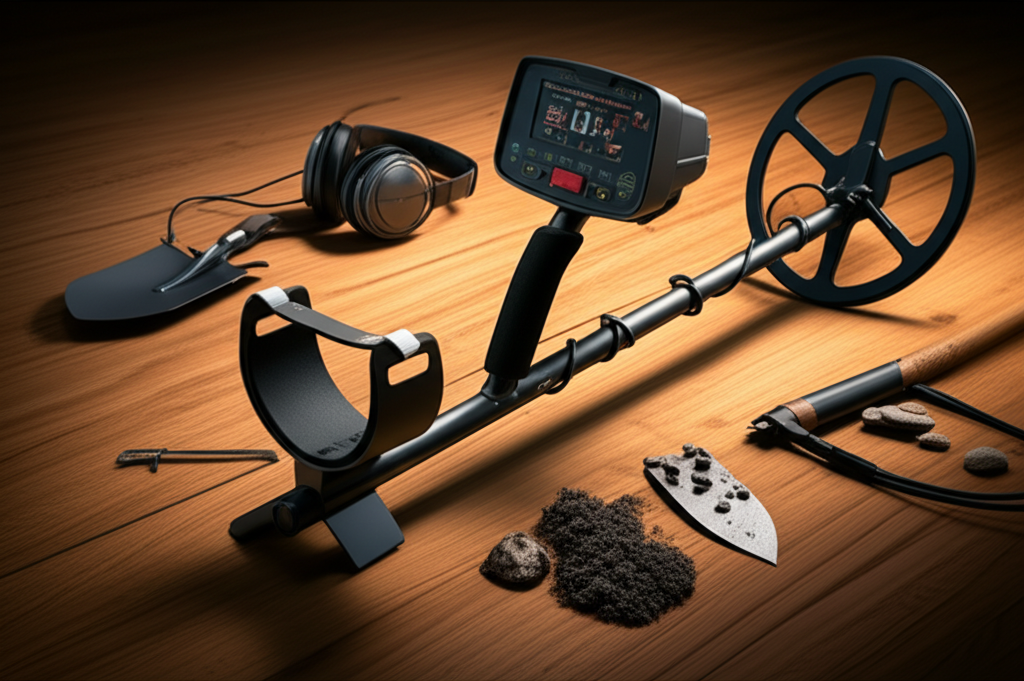
Published on: October 7, 2025 | Updated on: October 7, 2025
Uncover hidden treasures with the latest advancements in deep detecting metal detectors, revealing breakthroughs that significantly enhance your ability to find targets buried deeper than ever before, revolutionizing your treasure hunting experience.
The thrill of unearthing a lost coin, a valuable relic, or even gold is what drives many of us into the world of metal detecting. Yet, one of the most common frustrations for any detectorist, from the weekend warrior to the seasoned pro, is missing targets simply because they lie too deep for their current equipment. It’s a disheartening feeling to know something valuable might be just out of reach. But what if I told you that technology has taken a significant leap forward, offering solutions that unlock the secrets of deeper buried targets? This article dives into the essential breakthroughs in deep detecting metal detectors, showing you how to find what you’ve been missing.
What Makes a Metal Detector “Deep Detecting”?
A deep detecting metal detector is designed with enhanced capabilities to sense targets located further beneath the surface than standard detectors. This is achieved through a combination of advanced coil technology, sophisticated signal processing, and specialized frequencies. These machines are built to penetrate deeper into the ground, effectively increasing the range at which buried objects can be identified.
The Science Behind Deeper Detection: Core Technologies
Several key technological advancements contribute to a metal detector’s ability to achieve deep detection. Understanding these principles helps you appreciate the power packed into these devices. These breakthroughs are not just marketing buzz; they represent genuine improvements in how we hunt for buried treasures.
Advanced Coil Designs for Deeper Penetration

The coil is the heart of any metal detector, and innovations in coil design have been crucial for deep detecting capabilities. Larger diameter coils, improved winding techniques, and specialized shielding all play a role in maximizing signal depth. These coils can sweep a wider area and send a stronger signal into the ground, allowing for the detection of deeper targets.
Multi-Frequency and Wideband Technology
One of the most significant breakthroughs in deep detecting metal detectors is the advent of multi-frequency and wideband technology. Older detectors often operated on a single, fixed frequency. While effective for certain targets, this could limit depth and discrimination. Modern detectors can operate on multiple frequencies simultaneously or sweep a wide range of frequencies, allowing them to adapt to different ground conditions and target types. This adaptability is key to finding a wider array of targets at greater depths.
Enhanced Signal Processing and Discrimination
Beyond just sending out a signal, a detector must accurately process the returning signals. Advanced digital signal processing (DSP) algorithms in deep detecting models are far more sophisticated than those in older units. They can filter out ground noise more effectively, boost faint target signals, and provide more accurate target identification. This means you get clearer signals from deeper targets, reducing false positives and improving your ability to distinguish between trash and treasure.
Key Breakthroughs Revolutionizing Deep Detecting
The evolution of metal detecting technology has been rapid, and several specific breakthroughs have truly changed the game for those seeking deeper targets. These innovations have made the hobby more rewarding and accessible than ever before. I’ve seen many of these advancements firsthand in the field, and they make a real difference.
Pulse Induction (PI) vs. Very Low Frequency (VLF) for Depth
Historically, Pulse Induction (PI) detectors were often considered the champions of depth, especially in mineralized ground. They work by sending out short pulses and measuring the decay of the magnetic field. Very Low Frequency (VLF) detectors, on the other hand, use continuous waves and are generally better at discrimination. However, modern VLF and hybrid detectors have closed the gap significantly. Many advanced VLF detectors now incorporate multi-frequency capabilities that rival PI detectors for depth in many situations, while offering superior discrimination.
Ground Balancing Innovations
Ground mineralization is a major obstacle to deep detection, as it can mask faint signals from buried targets. Modern deep detecting metal detectors feature highly advanced automatic and manual ground balancing systems. These systems actively adjust the detector’s sensitivity to the soil’s mineral content, allowing the detector to “see” through the ground more effectively and pick up deeper signals. I’ve found that a detector with excellent ground balancing can make the difference between a fruitless day and a pocket full of finds.
Lightweight and Ergonomic Designs
While not directly related to signal depth, improvements in ergonomics and weight distribution are crucial for prolonged deep detecting sessions. Detectorists often need to swing larger coils for greater depth, which can be tiring. Newer detectors are designed with lighter materials and better balance, allowing you to cover more ground for longer periods without fatigue. This means you can spend more time searching those deeper targets.
Choosing the Right Deep Detecting Metal Detector: What to Look For
Selecting a deep detecting metal detector can feel overwhelming with so many options available. However, by focusing on a few key features, you can narrow down your choices and find a detector that suits your needs and budget. Consider what types of targets you’re most interested in finding.
Coil Size and Type: The Primary Driver of Depth
Generally, larger coils offer greater depth. A 10-inch coil is a good all-around size, but for serious deep detecting, coils of 11 inches, 13 inches, or even larger can provide that extra reach. However, larger coils are also heavier, can be more susceptible to ground noise, and may struggle with very small targets or cluttered areas. Consider specialized coils, like DD (Double-D) coils, which are known for their excellent depth and performance in mineralized ground.
Frequency: Matching the Detector to Your Targets
The frequency at which a metal detector operates significantly impacts its ability to detect different types of targets. Lower frequencies (e.g., 5-10 kHz) are better for larger, deeper targets like relics and caches. Higher frequencies (e.g., 15-30 kHz and above) are excellent for smaller, shallower targets like thin gold nuggets and hammered coins. Multi-frequency detectors offer the best of both worlds, allowing you to switch between or combine frequencies to adapt to various scenarios. For deep detecting, a detector capable of operating at lower frequencies or across a wide spectrum is often preferred.
Waterproofing and Durability for All Terrains
If you plan to hunt in various environments, including beaches, rivers, or wet fields, waterproofing is essential. Many modern deep detecting metal detectors are fully submersible, allowing you to explore underwater sites. Durability is also key; look for detectors built with robust materials that can withstand the rigors of outdoor use. I’ve had detectors that have been submerged and come out working perfectly, which opens up a whole new world of hunting.
User Interface and Ease of Use
While advanced features are great, a detector that is too complex to operate can be frustrating. Look for a user interface that is intuitive and easy to navigate. Many detectors offer preset modes for different hunting scenarios (e.g., coins, relics, gold), which can be very helpful for beginners. However, for deep detecting, you’ll likely want a detector that allows for manual control over settings like sensitivity, threshold, and ground balance to fine-tune performance.
Top Deep Detecting Metal Detectors on the Market Today
Based on my field experience and industry trends, here are a few categories of detectors that excel at deep detecting, along with what makes them stand out. These are not exhaustive lists, but represent highly capable machines.
Advanced VLF Detectors with Multi-Frequency Capabilities
These detectors offer a fantastic balance of depth, discrimination, and adaptability. Their ability to operate on multiple frequencies simultaneously or switch between them makes them incredibly versatile for finding a wide range of targets at depth.
Example: Minelab Equinox Series: Renowned for its Multi-IQ technology, which uses multiple frequencies simultaneously, offering excellent depth and target separation in various conditions.
Why they excel: They provide the sensitivity of high frequencies for small targets and the depth of low frequencies for larger items, all while managing ground mineralization effectively.
Dedicated Deep Seeking Detectors (Often PI or Specialized VLF)
For extreme depth, particularly in challenging ground conditions like black sand beaches or highly mineralized soil, specialized detectors often take the lead.
Example: Garrett ATX Deepseeker: A rugged, waterproof Pulse Induction (PI) detector designed for maximum depth and sensitivity to larger targets.
Why they excel: PI technology generally offers superior depth, especially in mineralized environments, though it often sacrifices some discrimination capabilities compared to advanced VLFs.
Gold Prospecting Detectors
While focused on gold, these detectors are inherently designed for deep detecting of small, low-conductivity targets. Many of these principles translate well to finding deep relics and coins.
Example: Nokta Makro Gold Finder 2000: A high-frequency detector optimized for finding small gold nuggets, but its sensitivity can be leveraged for other deep targets.
Why they excel: Their high sensitivity and specialized processing are tuned to pick up faint signals from tiny metallic objects buried deep.
Maximizing Depth: Techniques and Tips from the Field
Having a deep detecting metal detector is only half the battle; knowing how to use it effectively is crucial. These techniques will help you squeeze every bit of depth out of your detector. Practice is key, but these principles will set you on the right path.
Coil Control and Swing Speed: The Foundation of Deep Detection
The speed at which you swing your coil is critical. Swinging too fast will cause you to miss deeper targets because the detector doesn’t have enough time to process the returning signal. Conversely, swinging too slowly can lead to over-sampling and can be less efficient. A steady, consistent swing speed, typically around 2-3 seconds for a full sweep (left to right or right to left), is generally recommended for maximizing depth.
Ground Balancing: Mastering Your Detector’s Environment
As mentioned, proper ground balancing is non-negotiable for deep detecting. Whether your detector has automatic or manual ground balancing, take the time to perform it correctly every time you move to a new area with different soil conditions. This process tunes out the ground minerals, allowing your detector to focus on metallic targets. A well-balanced detector will give you cleaner signals and better depth.
Sensitivity Settings: Finding the Sweet Spot
Sensitivity controls how much the detector amplifies signals. While higher sensitivity can increase depth, it also increases the likelihood of picking up unwanted noise from ground mineralization or electromagnetic interference (EMI). Finding the “sweet spot” for sensitivity is crucial. This is typically the highest setting you can use before the detector becomes unstable and starts giving false signals. Experiment in your target areas to find this balance.
Understanding Target IDs and Tones
Deep targets often produce weaker signals, which can result in inconsistent Target IDs or faint audio tones. Learn to listen for subtle changes in the audio and observe how the Target ID might fluctuate. Sometimes, a faint, repeatable signal that might be dismissed by a less experienced detectorist could be a deep target. Don’t ignore those faint whispers!
Essential Accessories for Deep Detecting
Beyond the detector itself, certain accessories can significantly enhance your deep detecting experience and success rate. These tools complement your detector and make the process more efficient and enjoyable.
Larger Coils for Extended Reach
As discussed, a larger coil is often the first upgrade for someone serious about deep detecting. Consider investing in a larger aftermarket coil designed for depth, but be aware of the trade-offs in weight and sensitivity to small trash.
Quality Pinpointer for Accurate Location
Once your detector signals a target, a good pinpointer is essential for quickly and accurately locating it in the soil plug. This saves time and minimizes the size of the hole you need to dig. Many modern pinpointers are waterproof, which is a great advantage.
Robust Digging Tools
Digging deep targets often requires more effort. Invest in sturdy digging tools, such as a high-quality digging trowel, a soil knife, or even a small shovel. For very deep targets, you might even consider a digging stick or a portable spade. Being prepared to dig efficiently is part of successful deep detecting.
Headphones for Enhanced Audio Clarity
Good quality, waterproof headphones are a must-have, especially for deep detecting. They allow you to hear faint signals that might be missed with the built-in speaker, especially in noisy environments. They also help conserve battery life and provide a more immersive hunting experience.
Common Challenges in Deep Detecting and How to Overcome Them
Deep detecting isn’t without its challenges, but with the right knowledge and approach, these obstacles can be overcome. I’ve encountered most of these issues myself and have learned to manage them.
Dealing with Ground Mineralization
Highly mineralized ground can be a detectorist’s worst enemy, masking deep targets. Overcoming this requires a detector with excellent ground balancing capabilities and often the use of specific coil types (like DD coils) and frequencies. Sometimes, simply accepting that some areas are too difficult for your current equipment is also a valid strategy.
Electromagnetic Interference (EMI)
Power lines, cell towers, and even other metal detectors can cause EMI, leading to false signals and reduced performance. If you suspect EMI, try switching your detector’s frequency (if it’s multi-frequency) or changing your detector’s channel. Moving away from the source of interference is the most effective solution.
Target Masking
This occurs when a desirable target is located very close to or inside a larger piece of junk metal. The junk metal’s signal can overpower or distort the signal from the good target, making it difficult to detect. Advanced discrimination settings and careful pinpointer use can help identify these situations. Sometimes, digging the junk is the only way to be sure.
Fatigue and Physical Strain
Swinging larger coils for extended periods can be physically demanding. Proper technique, using your arm and shoulder to swing the coil rather than just your wrist, can help. Taking breaks and staying hydrated are also important. Investing in a detector with good ergonomics can make a significant difference.
The Future of Deep Detecting Metal Detectors
The advancements we’ve seen in deep detecting metal detectors are impressive, but the innovation isn’t stopping. We can expect even more sophisticated signal processing, better noise reduction, and perhaps AI-driven target identification. The quest for deeper and more accurate detection will continue to drive technological progress.
AI and Machine Learning Integration
Artificial intelligence is starting to make its way into metal detectors, promising more intelligent target analysis and ground balancing. These systems could learn to differentiate between targets and ground noise more effectively, leading to improved depth and accuracy. Imagine a detector that learns the unique characteristics of a site and optimizes itself accordingly.
Improved Coil Technology and Materials
Research into new coil designs and materials will likely yield detectors that can transmit and receive signals more efficiently, pushing the boundaries of detection depth even further. Lighter, more durable, and more sensitive coils are always on the horizon.
Enhanced User Interfaces and Connectivity
Future detectors may offer more intuitive interfaces, wireless connectivity for firmware updates and data logging, and even integration with smartphone apps for enhanced analysis and mapping of finds. This connectivity could revolutionize how we share finds and research historical sites.
Conclusion
The journey to uncovering those deeper buried treasures has been significantly transformed by the latest breakthroughs in deep detecting metal detector technology. From advanced coil designs and multi-frequency capabilities to sophisticated signal processing and ground balancing, modern detectors are more powerful and versatile than ever before. By understanding these technologies and employing smart field techniques, you can dramatically increase your chances of finding those elusive deeper targets. Equip yourself with the right knowledge, the right gear, and a determined spirit, and you’ll be well on your way to unlocking the secrets hidden beneath the surface. Happy hunting for those deep detecting metal detector finds!
Frequently Asked Questions About Deep Detecting Metal Detectors
Q1: What is the main difference between a standard metal detector and a deep detecting metal detector?
A deep detecting metal detector is engineered with specialized technology, like larger coils and advanced signal processing, to sense metallic objects buried significantly deeper in the ground compared to standard models.
Q2: Can I make my current metal detector detect deeper?
While you can optimize your current detector by using larger coils or adjusting settings, a detector specifically designed for deep detecting will generally offer superior depth capabilities due to its core technology.
Q3: Are Pulse Induction (PI) detectors always better for depth?
Historically, PI detectors offered greater depth, especially in mineralized soil. However, modern multi-frequency VLF detectors have become very competitive and often provide better discrimination, making them excellent for deep detecting in many scenarios.
Q4: How does ground mineralization affect deep detecting?
Ground mineralization can create “noise” that masks faint signals from deep targets. Advanced ground balancing systems in deep detecting models are crucial for overcoming this interference and achieving maximum depth.
Q5: What is the best coil size for deep detecting?
Larger coils, generally 11 inches or more in diameter, are typically used for deep detecting as they can cover more ground and send a stronger signal deeper. However, they can be heavier and less sensitive to small targets.
Q6: Do I need a special license to use a deep detecting metal detector?
Generally, no license is required for recreational metal detecting. However, always check local regulations regarding detecting on public or private land, as some areas may have restrictions or require permission.
Q7: How can I improve my chances of finding deep targets?
Combine a capable deep detecting metal detector with proper techniques like slow coil swing speeds, accurate ground balancing, listening for faint signals, and using a good pinpointer to pinpoint finds efficiently.
