


Published on: September 1, 2025 | Updated on: September 1, 2025
Maximize your productivity and connection with a thoughtfully designed small study room for two, blending efficiency, comfort, and shared space.
Creating a functional and inspiring workspace for two in a compact area might seem like a puzzle, but it’s entirely achievable. Many remote workers, students, or couples find themselves sharing limited space for focused work or study. This guide will walk you through the essential design principles to transform your small study room for two into a haven of productivity and cooperation. We’ll cover everything from furniture selection to clever storage and lighting, ensuring both individuals thrive.

Discover how to efficiently design a small study room for two, creating a productive and harmonious shared workspace that fosters focus and collaboration without feeling cramped. This section will set the stage for transforming your compact area.
Understanding the Core Challenges of a Small Study Room for Two
Sharing a small space for focused work presents unique hurdles. Limited square footage often means compromises on desk size, storage, and even personal comfort. You might face distractions from your co-occupant, or struggle to find a place for all your essential tools. Addressing these common issues upfront is key to a successful design.
Defining Your Shared Workspace Needs
Before diving into design, clearly define what you and your study partner need. Discuss work habits, essential equipment, and personal preferences. Understanding these individual requirements ensures the space serves both of you effectively.
Key Questions to Ask Yourselves:
What are our primary work or study activities? (e.g., writing, coding, video calls, creative work)
What essential equipment do we each need? (e.g., monitors, laptops, printers, specialized tools)
What are our noise tolerance levels and preferred working hours?
How much storage is absolutely necessary for each person?
What are our individual ergonomic needs?
Answering these questions will provide a solid foundation for making informed design decisions. It helps avoid potential conflicts and ensures the final layout is practical for everyone involved.
Smart Layout Strategies for a Compact Study Room for Two
Optimizing the layout is paramount in a small study room for two. Strategic placement of furniture can create distinct zones, enhance workflow, and maximize perceived space. Let’s explore effective layout approaches.
The Tandem Setup: Facing the Same Direction
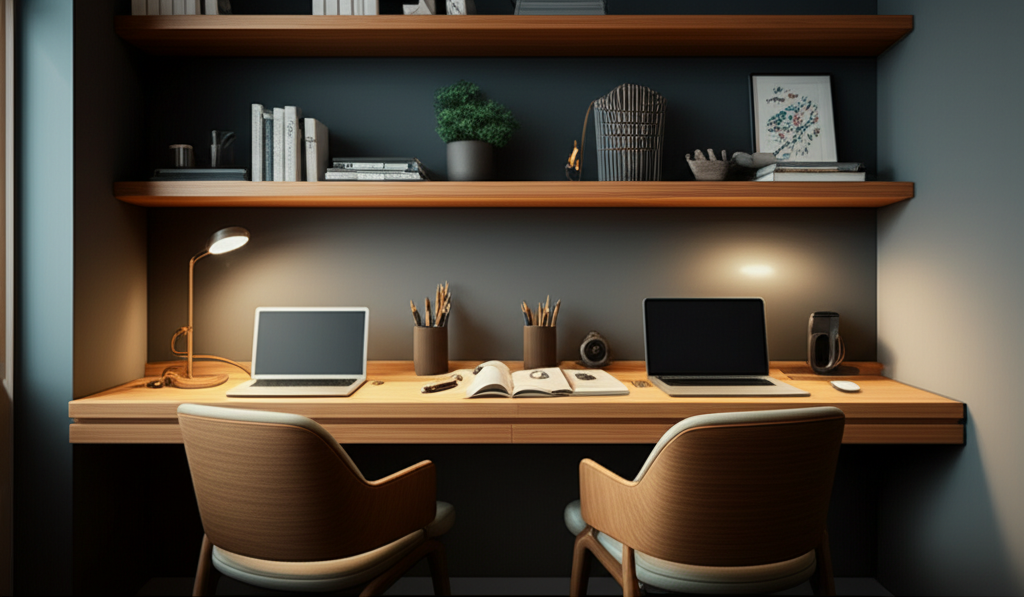
This arrangement places desks side-by-side, with both individuals facing the same direction. It’s a popular choice for small study rooms for two as it promotes a sense of shared focus and minimizes direct visual distraction between occupants.
Pros: Encourages parallel productivity, can feel more collaborative, efficient use of wall space.
Cons: Limited personal space, potential for light glare from shared sources, less individual privacy.
This setup works well when both individuals have similar working rhythms and don’t require a lot of back-and-forth interaction during work hours. Ensure adequate space between desks for comfort.
The Face-to-Face Approach: Working Across from Each Other
Placing desks opposite each other can foster a more direct collaborative environment. It allows for easy conversation and sharing of materials, making it ideal for study partners or teams working closely together.
Pros: Facilitates easy communication and collaboration, can create a more dynamic workspace.
Cons: Potential for increased distractions, requires careful consideration of legroom and personal space.
When implementing this layout, ensure sufficient distance between the desks to avoid feeling too close. Think about how each person’s equipment might affect the other’s space.
The Corner Embrace: Utilizing L-Shaped or Adjacent Corners
For very small or irregularly shaped rooms, utilizing corners with L-shaped desks or two smaller desks positioned at an angle can be highly effective. This maximizes often-underutilized space.
Pros: Excellent for maximizing corner real estate, can create a defined workspace within a larger room.
Cons: Can limit the number of monitors or larger desk setups, may require custom or modular furniture.
This solution is particularly beneficial when dealing with architectural quirks like bay windows or alcoves. It helps segment the space without feeling like a barrier.
Essential Furniture for Your Small Study Room for Two
Choosing the right furniture is crucial for both functionality and comfort in a shared small study room for two. Prioritize pieces that are space-efficient, ergonomic, and visually appealing.
The Desks: The Foundation of Your Workspace
Desks are central to any study room. In a small space for two, the type and size of desks significantly impact usability and flow.
Desk Recommendations for Small Spaces:
Compact Writing Desks: Slim profiles and minimal depth are ideal. Look for desks with built-in drawers or shelves for added storage.
Wall-Mounted Desks: These free up floor space and create a minimalist aesthetic. Consider a long, narrow wall-mounted desk that can accommodate two people.
Corner Desks: L-shaped desks can fit snugly into corners, making efficient use of often-wasted space.
Fold-Down Desks: For ultimate space-saving, these can be folded away when not in use, transforming the room.
When selecting desks, measure your available space meticulously and consider the depth needed for your monitors and keyboards. A good rule of thumb is to ensure at least 60cm (24 inches) of desk depth for comfortable work.
Ergonomic Seating: Comfort for Extended Sessions
Investing in comfortable and ergonomic chairs is vital, especially when sharing a space for extended periods. Poor seating can lead to discomfort and reduced productivity.
Key Ergonomic Features to Look For:
Adjustable Height: Essential for aligning your feet flat on the floor and maintaining proper posture.
Lumbar Support: Helps maintain the natural curve of your spine.
Adjustable Armrests: Support your arms and reduce shoulder strain.
Breathable Material: Prevents discomfort during long sessions.
Consider chairs with smaller footprints if space is extremely limited. Swivel chairs can also offer greater flexibility within a confined area.
Smart Storage Solutions: Decluttering Your Shared Space
Effective storage is non-negotiable in a small study room for two. Keeping clutter at bay is key to maintaining focus and a sense of calm.
Maximizing Storage in Limited Space:
Vertical Shelving: Utilize wall space with floating shelves or tall, narrow bookshelves. This draws the eye upwards and keeps the floor clear.
Under-Desk Storage: Rolling carts or small filing cabinets can tuck neatly under desks.
Wall Organizers: Pegboards, wall-mounted file holders, and magnetic strips can keep frequently used items accessible and off the desk surface.
Drawer Dividers and Organizers: Keep desk drawers tidy and everything in its place.
Think about shared storage versus individual storage needs. Perhaps one shared set of shelves for common supplies and individual desk organizers.
Lighting Strategies: Illuminating Your Productivity
Proper lighting can significantly impact mood, focus, and eye strain. In a small study room for two, balancing individual needs with shared light sources is important.
Layering Your Lighting for Optimal Illumination
A combination of ambient, task, and accent lighting creates a well-lit and functional workspace. This approach ensures adequate light for everyone without harsh glare.
Creating a Lighting Plan:
Ambient Lighting: Overhead fixtures or natural light from windows provide general illumination. Ensure these don’t create glare on screens.
Task Lighting: Individual desk lamps are crucial for focused work. Opt for adjustable lamps that can be directed where needed.
Accent Lighting: Subtle lighting, like a small lamp on a shelf, can add warmth and define areas.
Consider the placement of lights to avoid shadows cast by one person onto the other’s workspace. Position task lamps so they illuminate the work area without shining directly into your partner’s eyes.
Harnessing Natural Light Effectively
Maximize natural light whenever possible. Position desks near windows if feasible, but be mindful of direct sunlight causing glare.
Window Treatments: Use sheer curtains or blinds to diffuse harsh sunlight and control glare.
Desk Placement: If facing a window, consider a desk placement that allows you to look away from the direct light source periodically.
Natural light is proven to boost mood and productivity, so leveraging it is a significant advantage. It also makes the small study room feel larger and more open.
Enhancing Focus and Minimizing Distractions
In a shared small study room for two, managing distractions is a critical aspect of design. Proactive strategies can create a more productive environment for both occupants.
Creating Personal Zones within Shared Space
Even in a compact room, subtly defining personal territories can improve comfort and reduce perceived intrusion. This can be achieved through furniture placement or visual cues.
Desk Placement: As discussed, tandem or corner setups can naturally delineate space.
Visual Dividers: Low bookshelves, plants, or even strategically placed desk organizers can act as subtle visual barriers.
Color Coding: Assigning different colors to individual storage or accessories can help personalize and organize.
These subtle divisions help create a sense of ownership over one’s immediate workspace. It’s about fostering respect for personal boundaries within the shared area.
Noise Management for Shared Focus
Noise is a common issue in shared workspaces. Implementing strategies to mitigate sound can significantly boost concentration.
Practical Noise Reduction Tips:
Noise-Canceling Headphones: Essential for individuals who need deep focus or work in noisy environments.
Soft Furnishings: Rugs, curtains, and fabric pinboards can absorb sound and reduce echo.
White Noise Machines or Apps: These can mask disruptive background sounds with a consistent, calming noise.
Headphone Etiquette: Establish clear communication about when headphones are in use and when quiet is needed.
Open communication about noise preferences is key. Discussing what level of sound is acceptable can prevent friction.
Ensuring both individuals’ physical comfort and well-being is paramount for sustained productivity in your small study room for two. Ergonomics isn’t just about comfort; it’s about preventing strain and injury.
Setting Up Ergonomic Workstations for Two
Each person’s workstation should be tailored to their body and work style. This involves proper desk height, chair adjustment, and monitor positioning.
Ergonomic Checklist for Each User:
Desk Height: Elbows should be at approximately a 90-degree angle when typing.
Chair Height: Feet should be flat on the floor or a footrest, with knees at about a 90-degree angle.
Monitor Placement: The top of the screen should be at or slightly below eye level, about an arm’s length away.
Keyboard and Mouse: Positioned to allow relaxed shoulders and wrists.
Consider adjustable monitor stands or laptop risers to achieve optimal screen height for each user. This is especially important if you have different heights.
Promoting Movement and Breaks
Even with perfect ergonomics, prolonged sitting can be detrimental. Encourage regular movement and short breaks for both individuals.
Set Reminders: Use apps or simple timers to prompt short breaks every 30-60 minutes.
Standing Desk Options: If budget and space allow, consider a shared sit-stand desk or individual converters. This offers the benefit of alternating between sitting and standing.
Stretch Breaks: Incorporate simple stretches for the neck, shoulders, and wrists.
A small, shared space can even facilitate quick, shared stretching sessions. This can be a fun way to reconnect and reset during the workday.
Decor and Personalization: Making it Yours
While functionality is key, infusing personality into your small study room for two makes it a more pleasant and inspiring place to spend time.
Balancing Shared Aesthetics with Individual Touches
The goal is to create a cohesive look that appeals to both occupants while allowing for personal expression. This can be achieved through thoughtful choices in color, art, and accessories.
Color Palette: Choose a neutral base palette that is calming and versatile. Then, introduce pops of color through accessories that reflect individual preferences.
Artwork and Decor: Select pieces that are mutually agreeable, or create designated areas for individual art.
Plants: Greenery can boost mood and improve air quality, making the space feel more alive.
Consider a shared mood board to brainstorm ideas and ensure you’re on the same page aesthetically. This collaborative approach can prevent design disagreements.
Creating an Inspiring Atmosphere
The atmosphere of your workspace can greatly influence your productivity and well-being. Thoughtful decor can make your small study room for two feel less like a chore and more like a retreat.
Inspirational Quotes: Display motivational quotes that resonate with both of you.
Personal Photos: A few well-chosen personal photos can add warmth without overwhelming the space.
Aromatherapy: Diffusing calming essential oils can create a more serene environment.
The key is to keep decor intentional and avoid clutter. Every item should serve a purpose, whether it’s functional or emotional.
Technology Integration: Powering Your Productivity
Seamless technology integration is vital for a modern study room, especially when accommodating two users with potentially different tech needs.
Cable Management for a Tidy Space
Tangled cords can quickly make a small space feel chaotic. Effective cable management is essential for both aesthetics and safety.
Cable Management Solutions:
Cable Sleeves and Ties: Bundle cords together to keep them neat and out of sight.
Under-Desk Cable Trays: Mount these beneath your desks to keep power strips and excess cords off the floor.
Cable Clips: Adhere these to the desk or wall to route cords precisely where they are needed.
Wireless Peripherals: Where possible, opt for wireless keyboards, mice, and charging pads to reduce cord clutter.
A clean setup reduces visual distractions and makes cleaning easier. It contributes to a more professional and focused atmosphere.
Shared vs. Individual Tech Needs
Consider how you will manage shared resources like printers or internet connectivity, and individual needs like specific software or hardware.
Shared Printer: A compact, wireless all-in-one printer can serve both users efficiently.
Dual Monitor Setups: If space permits and work requires it, consider dual monitor arms that can be adjusted for each user.
* Network Connectivity: Ensure a strong Wi-Fi signal or consider wired connections for stability.
Planning for shared technology avoids duplicate purchases and ensures smooth operation. It’s about making technology work for both of you.
Frequently Asked Questions about Small Study Rooms for Two
Here are answers to common questions about designing and optimizing a small study room for two.
Q1: How much space do I really need for a small study room for two?
For a functional small study room for two, aim for at least 80-100 square feet (7-9 square meters). This allows for two desks, chairs, and basic circulation space. Even smaller spaces can work with very compact furniture and smart vertical storage.
Q2: What’s the best desk setup for a small study room for two?
The best setup depends on your interaction needs. Tandem desks facing the same direction are great for minimizing distractions, while face-to-face setups enhance collaboration. Corner desks are excellent for maximizing limited space.
Q3: How can I prevent distractions when working closely with someone?
Use noise-canceling headphones, establish clear communication about quiet times, and consider subtle visual dividers like low bookshelves or plants. Each person having their own dedicated task lighting also helps in maintaining individual focus.
Q4: What are the most important ergonomic considerations for a shared workspace?
Ensure both users have adjustable chairs and proper desk height, monitor placement at eye level, and sufficient legroom. Regular movement and short breaks are also crucial for well-being.
Q5: How can I make a small study room feel larger?
Use light colors, ample lighting (especially natural light), vertical storage to draw the eye up, and minimalist furniture. Keeping the space decluttered also significantly enhances the feeling of spaciousness.
Q6: Should we have separate storage or shared storage?
It’s often best to have a combination. Shared shelving for common supplies and individual desk organizers or small filing cabinets for personal items works well. This provides organization and a sense of personal space.
Designing a successful small study room for two is about thoughtful planning, smart furniture choices, and effective organization. By focusing on individual needs while respecting shared space, you can create an environment that fosters productivity, comfort, and even a sense of connection. Remember to prioritize ergonomics, manage distractions proactively, and infuse your personalities into the design. With these essential design principles, your compact workspace for two can become a highly functional and inspiring sanctuary for work and study.
